

Welcome to the St Laurence Churchyard Nature Trail!
This page is a guide to our Churchyard Nature Trail. Use it as you wander around to find out information about the flora, fauna and management work that’s gone on in different areas of our churchyard.
As you enter our churchyard, please take a walk around or sit for a while on one of our benches.
Our churchyard is a peaceful place. We invite you to take in the sights and sounds of the flora and fauna. The churchyard is also a functioning burial ground, so please make sure to be respectful of others using the churchyard too.
The creation of the nature trail has very much been a community project. The St Laurence Eco Church Group, the Blackmore Primary School Eco Committee and the Blackmore Scout groups have all contributed to put together the different areas of the nature trail.
We hope you enjoy exploring our churchyard!
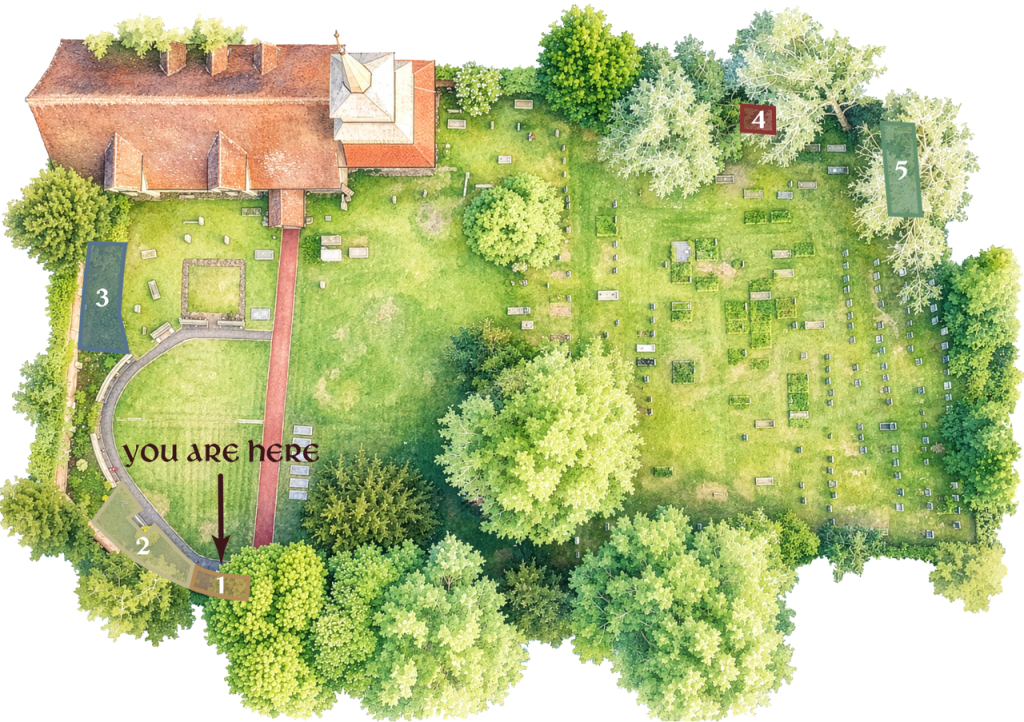

Nature trail areas

Our Wildlife Garden is still getting itself established.
Here’s what it could look like once the yellow rattle and wood sage begin to grow.
Our Wildflower Garden was planted in June 2026 by the children of the Blackmore Primary School Eco Committee.
Before the planting could begin though, the St Laurence Eco Church Group prepared the ground by clearing away the grass that was growing in the patch.
The children then raked over the bare soil to make a perfect seedbed. To help see where they were sowing, the children mixed the tiny wildflower seeds in buckets of sand so they could scatter them evenly across the whole patch.
The seed mix was carefully chosen to include native British plants that love churchyard life, including yellow rattle (Rhinanthus minor) and wood sage (Teucrium scorodonia).
A work in progress!
You don’t need to look closely at our Wildflower Garden today to notice it still looks quite bare and quiet. There are two good reasons for this:
Firstly, the seeds were sown right before the big UK heatwave in the summer of 2026, which made life very tough for tiny baby seedlings.
Secondly, real native wildflowers are famously slow starters. Unlike fast-growing garden flowers, wild plants spend their first year quietly growing strong roots underground. In fact, some wildflower seeds actually need the chill of a cold winter frost before they’ll wake up and sprout!
The marvel of the ‘meadow maker’
Have you heard of yellow rattle before? What do you know about it already?
It’s nicknamed the ‘meadow maker’, and it acts as a secret weapon in our wildflower garden. Grass is very greedy and usually crowds out delicate wildflowers, but yellow rattle feeds on grass roots, weakening it just enough to give our other wildflowers the opportunity to thrive.
Late in the summer, if you shake the dry seed pods of yellow rattle, they literally rattle like tiny musical maracas!
Wood sage and its buzzing benefits
The wood sage in our seed mix grows crinkled, sage-like leaves and spikes of pale, greenish-yellow flowers. It loves growing near historic church walls and trees.
As our Wildflower Garden establishes itself over the coming seasons, it’ll become a massive boost for churchyard wildlife:
- The ultimate pollinator café: From early spring to late summer, these native plants will provide a feast of nectar and pollen for bees, butterflies, hoverflies and beetles.
- A natural bug hotel: Their stems, leaves, and seed heads will create a dense mini-jungle where caterpillars, ladybirds and spiders can feed, hide and lay their eggs.
- Feed the birds: In autumn, we’ll leave the dried-out flower heads standing because they’re packed with natural seeds – providing a vital feast for hungry birds as the weather turns cold.
Nature trail challenge!
Take a close look at our developing Wildflower Garden:

Even while it’s still growing, can you spot any tiny green leaves just starting to poke through the soil, or any mini-beasts busy at work on the ground?
Imagine all those tiny seeds tucked safely in the earth, waiting for warmer weather to burst into bloom!
If you’re visiting in the late summer, as the yellow rattle begins to grow, can you find it and hear its rattle in the breeze?
Our Easter Daffodil Garden was planted by the children of the Blackmore Primary School Eco Committee in December 2025.
The children planted around 150 bulbs of the ‘King Alfred’ daffodil – a famous British heritage variety first grown in Devon, England in 1899 and named after King Alfred the Great. Famous for its large, bright golden-yellow petals and bold trumpet, ‘King Alfred’ is one of the best-loved spring flowers in the country.
Helping local wildlife
Creating a dedicated daffodil patch is wonderful for local wildlife. Unlike frilly ‘double’ daffodils that are packed with extra petals, traditional trumpet daffodils are open and easy for hungry queen bumblebees and early butterflies to visit when they wake up from their winter sleep.
Underground, the daffodils’ roots keep the soil healthy and give mini-beasts a safe home. Above ground, if you look carefully around the daffodils’ stems, you may be able to see tiny purple violets blooming low in the grass.
Best of all, the bulbs multiply on their own every year, meaning our golden display will grow thicker and brighter every spring without needing any chemicals or extra watering.
A sign of Easter hope
The daffodils were planted next to our memorial garden to remind us – as we remember those we’ve lost – of the hope of the Easter story. Daffodils are buried beneath the earth, where they lie dormant for a time before bursting into bloom at Easter time. Likewise, Jesus was crucified and buried in a tomb, but at Easter He triumphantly defeated death to offer the hope of new life to those of us who put our trust in Him.
Nature trail challenge!
When the daffodils are in bloom, lean in for a closer look (without picking them!).
Can you count how many outer petals surround each golden trumpet?
Keep an eye out for sleepy queen bumblebees climbing inside for a drink.
Look carefully down in the grass around the stems to see if you can spot the tiny purple violets hiding underneath.
Visiting later in the year?
Look for the green leaves soaking up sunshine to feed the bulbs – or imagine all 150 bulbs fast asleep underground, waiting for next Easter!
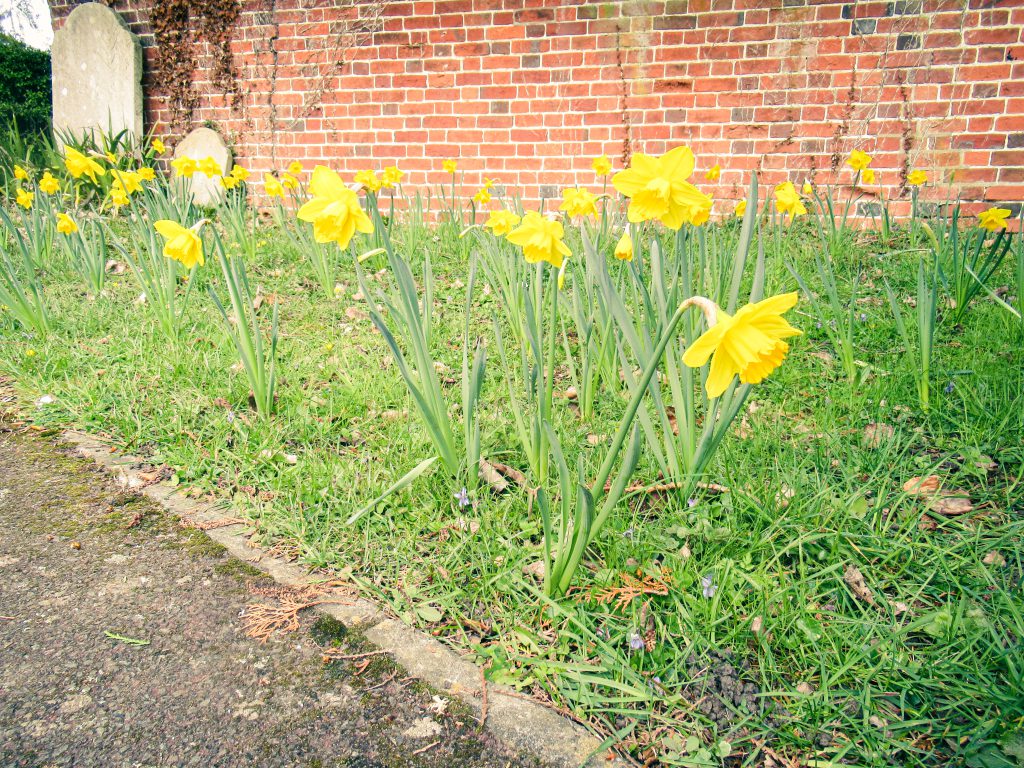
The Easter Daffodil Garden in bloom, March 2026

Our Butterfly Garden is also currently under development.
Here’s what it could look like when it’s finished.
Watch this space! We’re currently in the process of planning a brand-new Butterfly Garden to add another colourful stop to our churchyard nature trail.
At the heart of the garden will be a buddleia (Buddleja davidii) – often nicknamed the ‘butterfly bush’ because its cone-shaped clusters of purple flowers are irresistible to butterflies.
Surrounding the buddleia, we plan to plant a mix of nectar-rich flowers like English lavender (Lavandula angustifolia), verbena (Verbena bonariensis) and wild marjoram (Origanum vulgare), alongside leafy plants like bird’s-foot trefoil (Lotus corniculatus) and nasturtiums (Tropaeolum majus) for caterpillars to nibble on.
(If we include an autumn-flowering ice plant /sedum, its Latin name is Hylotelephium spectabile.)
Why plant a Butterfly Garden?
Over the last few decades, butterfly numbers in Britain have dropped, because many wild meadows and flower-filled gardens have disappeared. By turning a corner of our churchyard into a butterfly haven, we’re giving these delicate insects a safe place to feed, rest and raise the next generation.
Why butterflies matter for biodiversity
- Nature’s health check: Butterflies are very sensitive to changes in their environment. When a churchyard is full of butterflies, it tells us that the soil, plants and air are healthy for all wildlife.
- Busy pollinators: Just like bees, butterflies carry pollen from flower to flower as they drink nectar, helping plants produce seeds and fruit.
- Part of the food web: A healthy butterfly garden supports more than just butterflies! Plump caterpillars are a vital spring food source for churchyard birds feeding their hungry chicks.
- Year-round shelter: Even when winter arrives, evergreen shrubs and ivy along our old churchyard walls give hibernating butterflies like the Brimstone and Peacock a dry, sheltered place to sleep until spring.
Nature trail challenge!
When you pass this spot, keep your eyes peeled as our new garden takes shape!
Once the plants are in bloom, see how many different colours of butterfly you can count.
Look carefully underneath the leaves to spot any hungry caterpillars or tiny eggs.
Not sure which butterfly you’ve spotted? Use the Butterfly Conservation online identification guide to match its wing colours and patterns!
This peaceful area of the churchyard used to be a traditional rose garden, but our local deer had other ideas – regularly sneaking in for a tasty snack on the rose bushes!
Instead of fighting a losing battle, we’re transforming this space into a Garden of Remembrance combined with a Community Herb Garden.
Alongside our surviving rose bushes, we’re planting rosemary (Salvia rosmarinus). For hundreds of years, evergreen rosemary has been used as a symbol of remembrance, making it the perfect plant to help us pause and remember loved ones.
Clever herbal ‘bodyguards’
Planting herbs around the roses isn’t just about creating lovely scents – it’s a clever nature trick called companion planting.
Deer don’t like strong-smelling leaves, so surrounding the roses with fragrant rosemary, sage (Salvia officinalis), thyme (Thymus vulgaris) and chives (Allium schoenoprasum) creates a natural, invisible shield that helps protect the rose bushes without needing high fences or chemicals.
Good for wildlife & our community
- A year-round pollinator café: Rosemary produces pale blue flowers early in the spring for waking bumblebees, while purple chive pom-poms, sage and oregano (Origanum vulgare) keep bees and butterflies fed right through the summer.
- Natural pest control: Strong-scented herbs like chives help confuse garden pests such as greenfly, keeping our rose bushes healthy without any chemical sprays.
- Free herbs for local kitchens: Our herb garden is for the whole community to share! If you’re passing by, you’re very welcome to carefully pinch or snip a few fresh sprigs to take home and add flavour to your family’s cooking – just make sure you leave enough for the bees and the next visitor!
Nature trail challenge!
Take a closer look – and a sniff! – at our Garden of Remembrance–Community Herb Garden:
Gently rub a leaf of rosemary, sage or thyme between your fingers and take a big sniff – which Sunday roast dinners do they remind you of?
Look closely to see how many of our original rose bushes you can spot standing safely among their smelly herb bodyguards! What colour roses can you see?
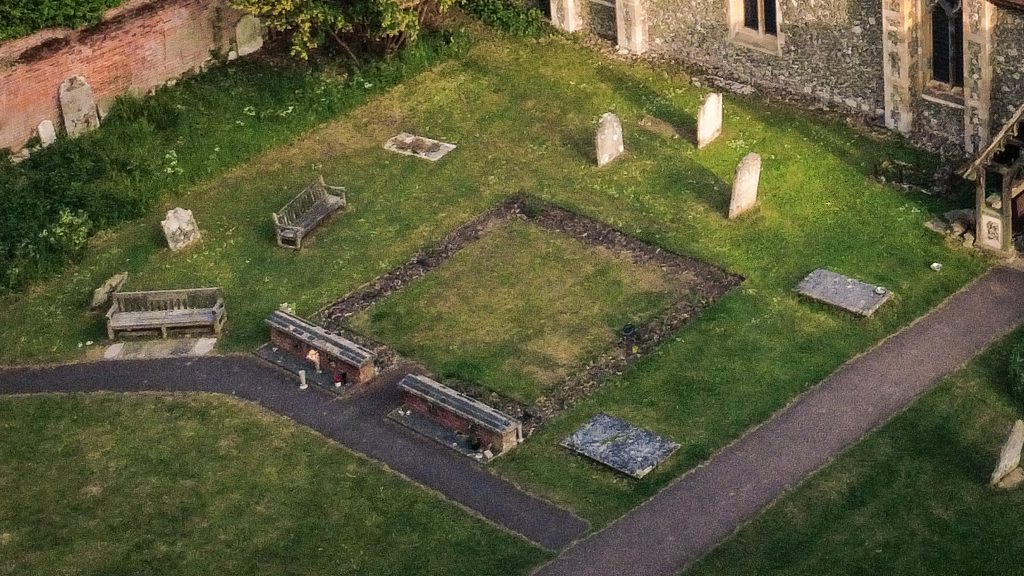
The Garden of Remembrance from the air, May 2026.
The rose bushes have never been able to grow as they’ve become a popular snack for our local deer.
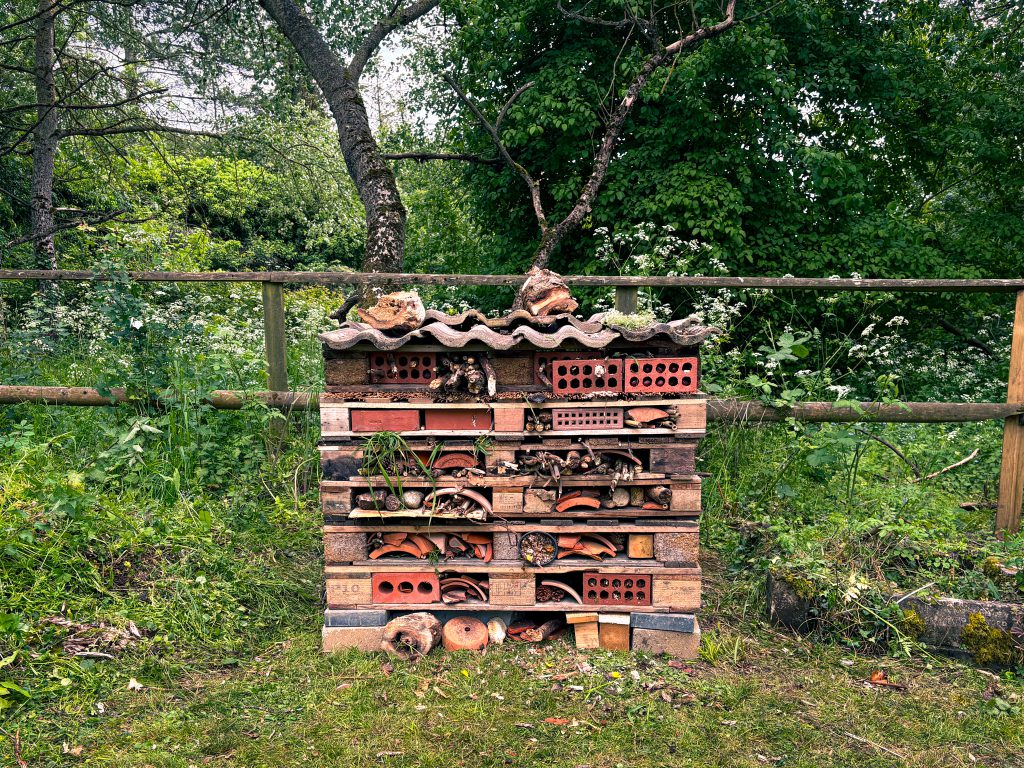
Our newly constructed bug mansion, May 2026
Forget bug ‘hotel’, this is a Bug Mansion! It was built in May 2026 by the Blackmore Beavers group using stacked wooden pallets topped with curved roof tiles to keep the rain off.
Tucked against the south fence of the churchyard, our five-star mini-beast resort is packed with recycled materials gathered and supplied by the Beavers – including perforated red bricks, curved terracotta roof tiles, pinecones, hollow tubes, twigs and chunky logs – to create hundreds of cosy nooks and crannies.
Who are our Bug Mansion guests?
Different floors of the mansion are designed to welcome different guests to our churchyard:
- Solitary bees (The Upper Floors): Gentle bees like the Red Mason Bee and Leafcutter Bee love the round holes of the garden canes and perforated bricks. Unlike honeybees, they don’t live in hives or make honey – instead, a female bee lays an egg inside a hole with a stash of pollen and seals the front door with mud or neatly cut circles of leaf.
- Ladybirds and lacewings (The Terracotta Suites): In autumn, hundreds of ladybirds and delicate green lacewings squeeze into the tight, dry gaps between the curved tiles, sticks and pinecones to hibernate safely through the winter.
- Woodlice, beetles and centipedes (The Ground Floor): Down at the bottom, where the logs and bricks sit close to the cool, damp grass, nature’s clean-up crew happily munches away on rotting wood and dead leaves.
- Spiders – and maybe a toad!: Deep cracks in the bricks and logs give spiders quiet corners to hide, while the shady gaps right underneath the bottom pallet offer a cool summer retreat for a visiting frog or toad.
Small bugs, big jobs!
They might be tiny, but the mini-beasts moving into our Bug Mansion are some of the hardest workers in the churchyard. Every bee, beetle and woodlouse has an important part to play in keeping nature healthy. Giving them a safe home helps the whole churchyard thrive:
- Replacing lost homes: Modern gardens are often swept too tidy, leaving mini-beasts with nowhere to nest or shelter. Our Bug Mansion gives them safe, chemical-free housing all year round.
- Super-pollinators: Solitary bees are brilliant pollinators – a single Red Mason Bee can pollinate as many flowers as dozens of honeybees, helping our churchyard wildflowers, herbs and trees thrive.
- Nature’s pest control: Ladybirds, lacewings, spiders and ground beetles eat huge numbers of greenfly and slugs, keeping churchyard plants naturally healthy.
- Feeding birds and hedgehogs: By giving mini-beasts a safe place to breed, the Bug Mansion provides a steady food supply for churchyard robins, blackbirds, wrens and hedgehogs.
Nature trail challenge!
Lean in to the Bug Mansion to take a closer look. Please take care not to disturb our guests though:
Stand quietly in front of the Bug Mansion and count how many pallet ‘storeys’ tall it is.
Look closely at the round holes in the garden canes and red bricks (without poking fingers or sticks inside!) – can you spot any holes sealed shut with dried mud or green leaves where a solitary bee has tucked its babies inside?
Peek down at the shady ground floor to see if any woodlice or beetles are scuttling about.
Spotted a mystery mini-beast? Use The Wildlife Trusts’ Invertebrates Explorer on your phone to find out who’s checked in!
Tucked into the south-west corner of the churchyard, you’ll find our Wildlife Log Pile. The logs were sourced from a branch from a nearby tree. See if you can spot where it came from.
When a large branch on the tree grew too heavy and began to overhang the churchyard, it had to be safely trimmed back. Rather than shredding the timber or taking it away, we stacked the cut logs neatly here to make sure nothing went to waste.
The log pile might just look like a quiet heap of old wood, but dead wood is actually one of the richest habitats in Britain!
Creatures, mosses and mushrooms
Over the seasons, the damp, shady spaces between the logs welcome a huge variety of wildlife and woodland plants:
- Wood-boring beetles and grubs: Beetles such as the lesser stag beetle and ground beetles lay their eggs in decaying timber. Their plump white grubs spend years safely tunnelling through the soft wood before emerging as adults.
- The ground-floor clean-up crew: Lift the edge of the loose bark (with your imagination, not your hands!) and you’d find woodlice, millipedes, centipedes and spiders thriving in the cool, dark crevices.
- Amphibians and reptiles: Frogs, toads and legless lizards called slow worms love tucking themselves underneath the bottom logs to stay cool during hot summer days and hibernate safely through the winter.
- Mosses, ferns and lichens: As the bark holds onto rainwater, velvety green mosses and crusty grey-green lichens slowly spread across the wood – a great sign of clean churchyard air. Around the damp base, look out for shade-loving hart’s-tongue fern (Asplenium scolopendrium) and male fern (Dryopteris filix-mas).
- Woodland fungi: In autumn, colourful toadstools and shelf-like bracket fungi – such as turkey tail (Trametes versicolor) – sprout from the logs to help break down the tough wood fibres.
Dead wood is full of life!
In wild forests, fallen branches stay on the woodland floor for decades, feeding thousands of species. Keeping this trimmed branch in our churchyard brings a little slice of wild woodland into Blackmore:
- Nature’s recycling centre: As fungi, beetles and damp weather slowly rot the logs down over several years, the wood turns into rich, crumbly compost that feeds nearby churchyard trees and wildflowers.
- A churchyard larder: Robins, wrens, blackbirds and hedgehogs regularly visit the log pile to hunt for crunchy beetles, spiders and woodlice.
- Shelter from extreme weather: Thick stacks of timber act like natural insulation, protecting delicate creatures from freezing winter frosts and dry summer heatwaves.
- Locking away carbon: Leaving timber to decay naturally releases carbon far more slowly than burning it, helping us care for the local environment.
Nature trail challenge!
Without climbing on or rolling the heavy logs, take a close look:
Study the bark, how many different colours and textures can you spot – from bright green moss to flat, crusty lichens or shelf-like fungi?
Peek quietly into the dark gaps between the logs to see if any spiders have spun their webs.
Listen carefully to hear if a robin or wren is rustling or singing nearby.
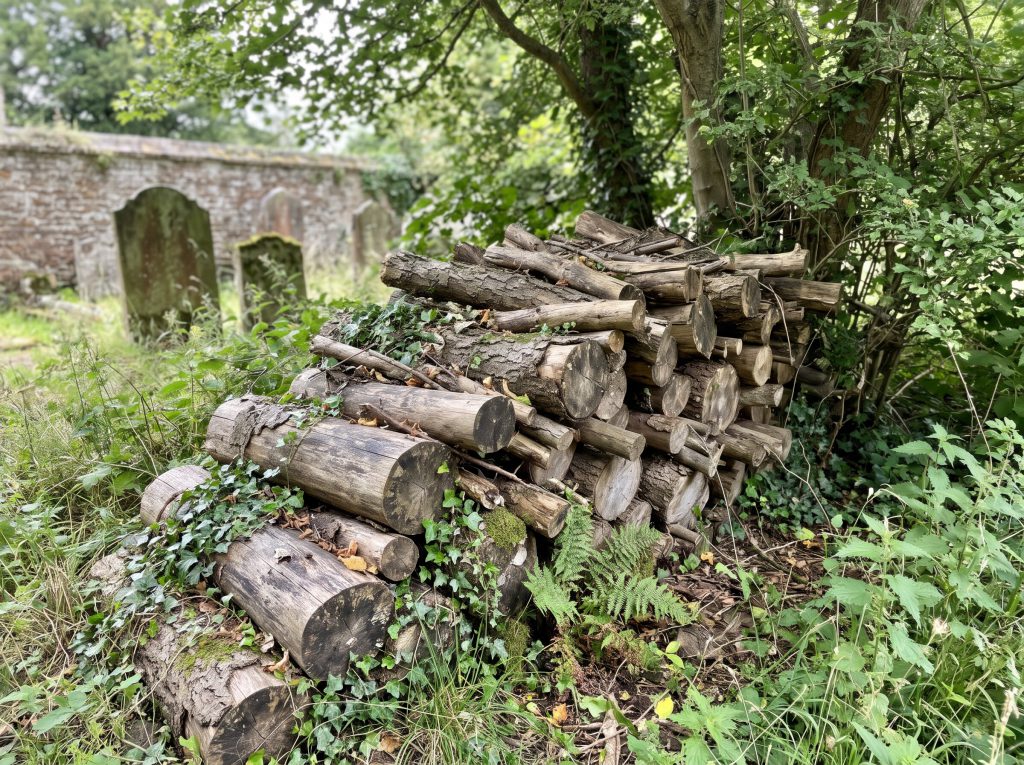
The logs in our Wildlife Log Pile were sourced from a nearby tree
Coming soon!
Look up into the trees around the churchyard, and you might spot our Bat Boxes. The wooden boxes were kindly built by the Blackmore Cubs group.
The bat boxes are dispersed across different trees so our local bats have plenty of cosy places to rest. Until recently we had three, though we’ve had to take one down from an unsafe, leaning tree.
We have several other bat boxes in storage also waiting to be put up across the churchyard, so make sure to come back to see if you can spot new boxes going up!
Why do bats need their own boxes?
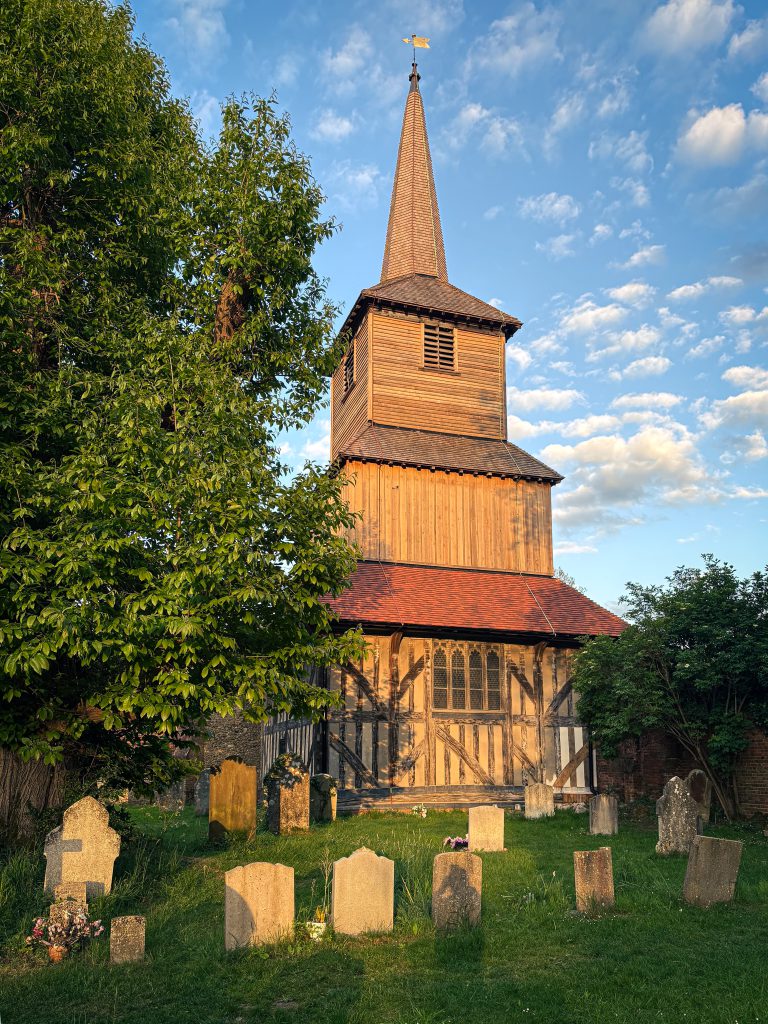
For generations, bats have loved sleeping inside the quiet, shadowy corners of our historic wooden bell tower here at the Priory Church of St Laurence, Blackmore.
While we love sharing our churchyard with wildlife, years of roosting inside the tower eventually took a toll on the ancient timbers – one of the reasons the tower recently needed an expensive restoration!
Since all British bats are protected by law and are a special part of our local ecosystem, we decided to offer them a new home! Hanging bat boxes in the surrounding trees creates a cosy woodland neighbourhood just for them, keeping both our newly restored wooden tower and our resident bats safe and happy, hopefully for years to come.
Who might move into the bat boxes?
Several species of British bats live in local churchyards and use wooden boxes:
- Common Pipistrelle (Pipistrellus pipistrellus) & Soprano Pipistrelle (Pipistrellus pygmaeus): These are our smallest and most widespread bats, and the ones you’re most likely to see swooping around at dusk. Tiny enough to fit inside a matchbox, they love squeezing into narrow crevices inside wooden bat boxes.
- Brown Long-eared Bat (Plecotus auritus): Famous for roosting in old church roofs and wooden cavity bat boxes, this shy bat has enormous ears – nearly as long as its entire body – which it uses to listen for moths and spiders resting on leaves.
- Natterer’s Bat (Myotis nattereri): A quieter woodland bat that’s most often found around historic churches and happily uses wooden cavity boxes.
- Bonus Bat!: Because Blackmore is close to good pockets of Essex woodland, visitors looking up at dusk might also spot Noctule Bats (Nyctalus noctula) – Britain’s largest bat – flying high above the treetops alongside swifts, though they tend to roost in old woodpecker holes rather than bat boxes.
Night-time heroes of the churchyard
Bats are the only true flying mammals in the world, and having them in the churchyard is a wonderful sign of a healthy environment:
- Super-powered bug catchers: All UK bats feed on night-flying insects such as midges, mosquitoes and moths – a single tiny pipistrelle can munch through thousands of midges in just one night!
- Replacing lost tree hollows: In the wild, bats roost under loose bark and inside old hollow trees. Wooden bat boxes mimic those natural hideaways, giving female bats a warm, draught-free nursery to raise their single baby (‘pup’) in summer.
- Worth the wait: Bats can be fussy house-hunters and sometimes take a year or two to discover new boxes, which is why putting up plenty of them in different spots gives them the best chance of moving in.
Nature trail challenge!
Have a go at these bat-spotting challenges as you explore the trees around the churchyard. Make sure you look without disturbing the bats or their boxes – bats and their roosts are protected by UK law, and bats need peace and quiet while sleeping during the day:
Crane your neck up towards the tree trunks to see how many of the Blackmore Cubs’ wooden bat boxes you can find.
We have several other bat boxes in storage also waiting to be put up across the churchyard. Make sure to come back to see if you can spot the new boxes going up!
If you visit near sunset on a warm summer evening:
Watch the dark outline of the treetops and our wooden bell tower to see if you can spot fast-flying pipistrelles zig-zagging across the sky on an insect hunt.
Want to learn more about identifying local bat species? Take a look at the Bat Conservation Trust’s UK Bats guide on your phone.
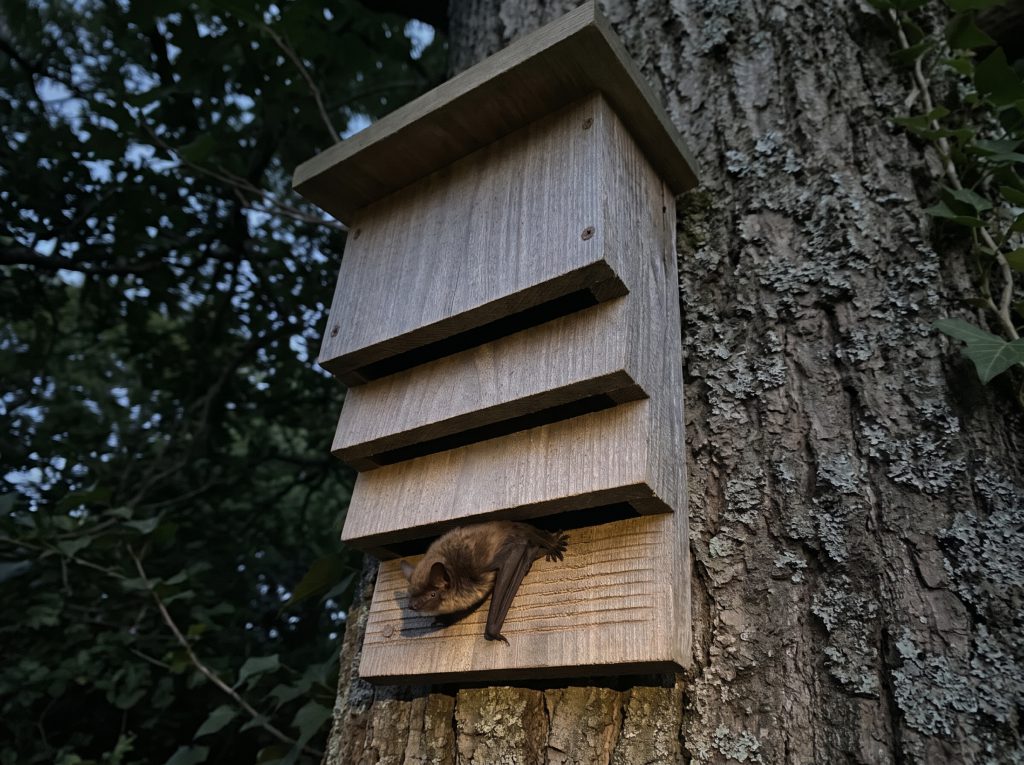
See if you can spot all of our bat boxes around the churchyard
Would you make a gift towards the upkeep of our ancient church community?
Our church community is over 900 years old, and our building is of national importance. If you’ve enjoyed visiting our website, would you consider making a donation to help continue the work of our church community?