
The 16th Century
The Tudor Period

The world in the 16th century
The 1500s were a century of gripping royal dramas, daring sea voyages and a religious upheaval that would change England forever.
It was an era of brave explorers sailing around the entire world for the first time.
Everywhere, massive changes were unfolding. Across the Atlantic Ocean, Spanish conquistadors landed in Mexico, altering the history of the Americas forever.
These global voyages completely changed what people ate. For the first time, ships returning from the Americas brought back exotic new foods that Europeans hadn’t seen before – including potatoes, tomatoes, chocolate and turkeys!
In Europe, a monk named Martin Luther sparked a religious revolution with his radical new ideas.
At home, powerful Tudor monarchs ruled over a golden yet dangerous age of grand palaces, wooden warships and the great plays of William Shakespeare.
But the royal court in London held a massive secret. Why was King Henry VIII sneaking off to Essex?
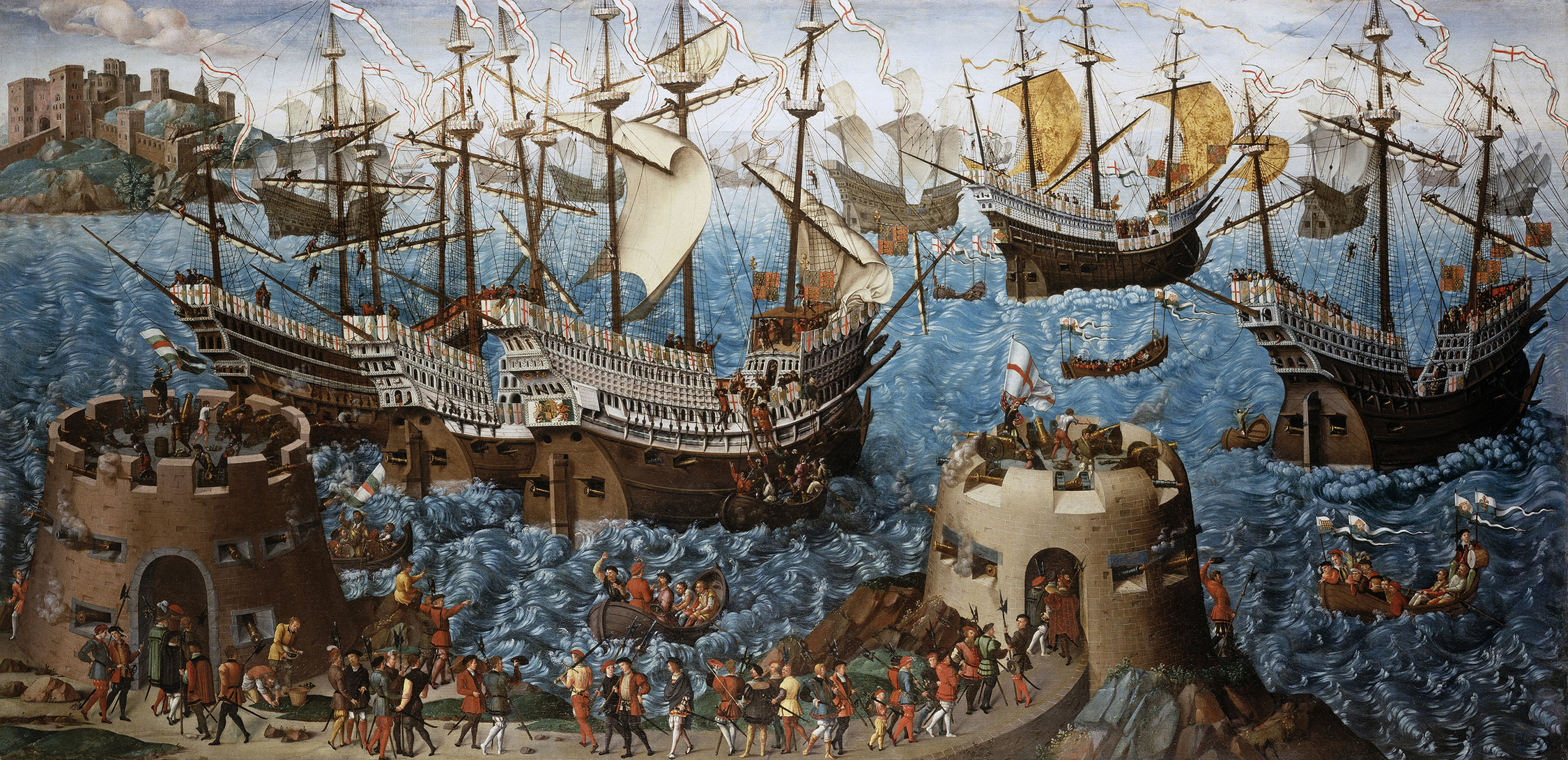
Sailing to the Field of Gold: This spectacular Tudor painting was ordered by King Henry VIII to show off his mighty navy.
Henry is visible, standing on the ship with the golden sails as his grand fleet sets sail from Dover Castle in 1520. (Click to enlarge the image.)
(Image source: Unknown Artist, The Embarkation of Henry VIII at Dover (c.1540), Royal Collection Trust / Public Domain via Wikimedia Commons.)

What do you think might have been the hopes and fears of the 16th-century inhabitants of Blackmore?

Blackmore in the 16th century
The English prince from Blackmore

A portrait of Henry VIII by an unknown artist c.1520. This is how Henry looked around the time he was visiting Blackmore.
(© National Portrait Gallery, London)
King Henry VIII is probably England’s most famous king. And the story of his six wives, and his desperation for a son, is one of the most famous stories in English history.
Henry was married six times as he searched for a wife who could give him a son. In Tudor times, daughters only created uncertainty: England might not accept a queen. Even if it did, daughters got married and passed the crown to their husband’s family. Henry needed a son if he was to guarantee the Tudor’s grasp on the English crown when he died.
As part of his famous quest, Henry secretly came to Blackmore in the summer of 1519. It was a visit to meet his firstborn son – born just a few dozen metres from where you’re standing. Many of us might know that Edward VI succeeded Henry as king; but it wasn’t Edward who he’d come to visit. Henry, in fact, had a another son before Edward.
This is the story of Henry VIII’s firstborn son…
The story begins in 1514 with a teenage girl. The girl was a maid of honour to Henry VIII’s wife, Queen Catherine of Aragon. Her name was Elizabeth ‘Bessie’ Blount.
Bessie Blount was born in Kinlet, Shropshire sometime between 1498 and 1502. The Blount family were members of the local Shropshire gentry. Bessie had been brought up well; it was hoped she’d one day earn a place at the Tudor Court. She could read and write well, play a musical instrument, and also sing and dance well. She was reportedly very beautiful, too.
In 1514, after five years of marriage, Catherine of Aragon had only given birth to one daughter (the future Queen Mary I). Henry was beginning to lose his patience with her.
At the Twelfth Night celebrations of January 1514, the 23-year-old Henry noticed the beautiful young Bessie and chose her to be his dance partner. It was from this time that they began a secret relationship.
Bessie attended the feasts and dances of the Tudor Court regularly until October 1518, when she suddenly disappeared from court. Around this date it became clear that Bessie was pregnant.
In early 1519, Cardinal Thomas Wolsey, Henry VIII’s chaplain and his most important advisor, arranged for Bessie to be quietly brought to Jericho Priory in Blackmore. Bessie was placed in the manor-house belonging to the Prior of St Laurence, Thomas Goodwyn. Sometime between April and June (quite possibly 18 June), Bessie gave Henry the gift he’d been most longing for: a son.
How do you think Bessie Blount felt about her relationship with Henry VIII?

Sculpture of Elizabeth Blount on her parents’ tomb

Elizabeth Blount’s funeral brass
These are the only two confirmed depictions of Elizabeth Blount. There are no confirmed portraits of her.
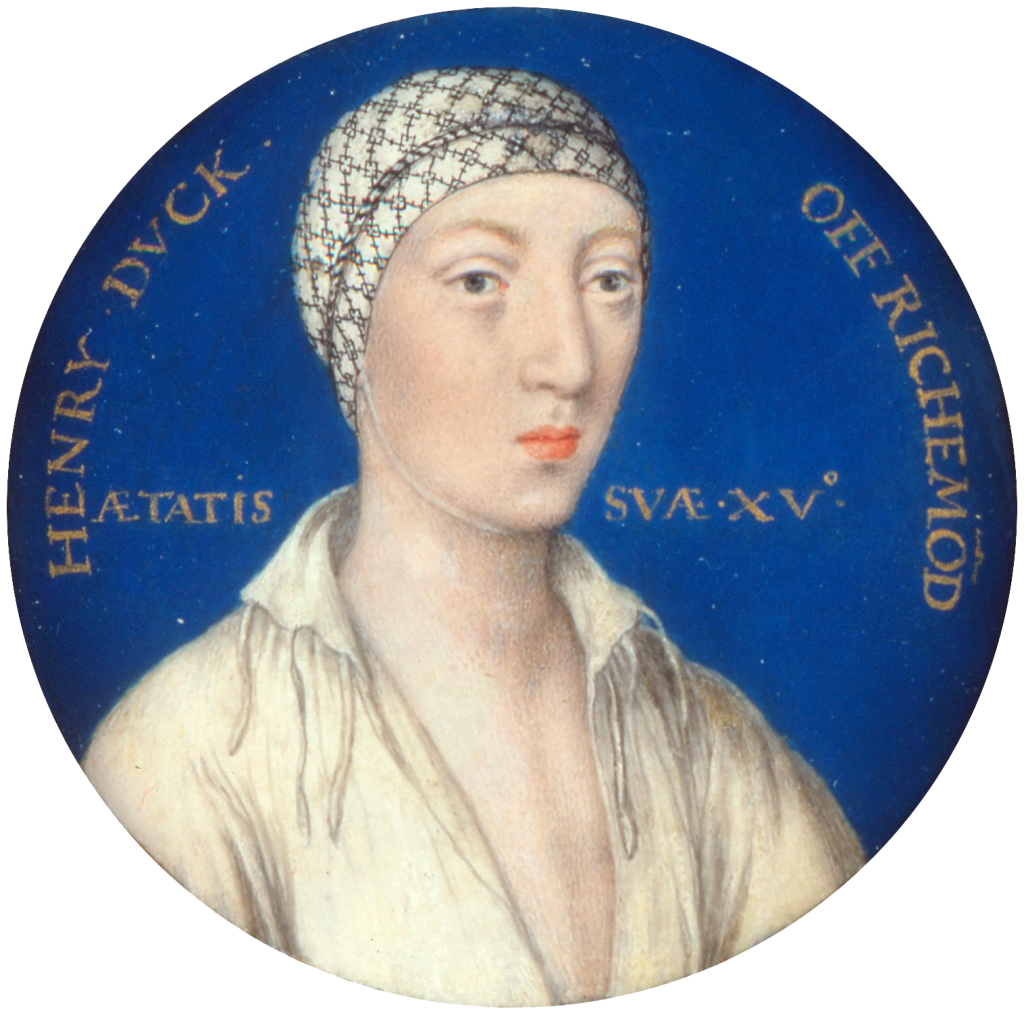
A portrait of Henry Fitzroy c.1533 by Flemish artist Lucas Horenbout
Henry VIII named Bessie Blount’s son ‘Henry Fitzroy’. The Anglo-Norman surname ‘Fitzroy’ means ‘son of the king’. By giving him this surname, Henry was claiming little Henry as his son.
King Henry spent the summer of 1519 living at the Palace of Beaulieu, just outside Chelmsford. It’s likely that Henry visited Bessie and little Henry in Blackmore often throughout that summer. It may not have been the first time that the couple had spent time together in Blackmore. In the Tudor Court, the phrase ‘Henry has gone to Jericho’ became code, meaning Henry was visiting with one of his mistresses in Blackmore.
We don’t know for certain, but little Henry was likely baptised in the font in this church. Cardinal Wolsey probably led the service and Henry VIII possibly also attended. Cardinal Wolsey became little Henry’s senior godfather.
The King was overjoyed at Henry Fitzroy’s birth. It was proof he was capable of producing a son. For this reason, he was very proud of little Henry.
Even though his father was the King of England, Henry Fitzroy’s mother wasn’t the Queen. In Tudor times this was important. It meant that little Henry might not be able to become the next king of England. Many children had been born in Henry Fitzroy’s position in the past, but he was different because Henry VIII was publicly acknowledging him as his son. This was unique.
It resulted in rumours and whispered questions in the Tudor Court, and in royal courts across Europe: Was Henry VIII planning to name Henry Fitzroy as his heir?
The question is a royal mystery to which we’ll never know the answer. Henry Fitzroy died on 23 July 1536, reportedly of ‘consumption’. It probably wasn’t tuberculosis but some other type of serious lung infection. He was just 17 years’ old. All we’re left with are clues which we can use to make a guess about what Henry VIII was planning to do:
| Clue 1 | 17 June 1525: Henry Fitzroy was elected Knight of the Garter. |
| Clue 2 | 18 June 1525: Henry VIII arranged a bizarrely ornate ceremony for six-year-old Henry. The ceremony was attended by Cardinal Wolsey and the Dukes of Norfolk and Suffolk, three of the most powerful people in England. Henry Fitzroy was first made Earl of Nottingham and a few moments later the Duke of Richmond and Somerset. (Duke of Somerset was a title held by his grandfather, King Henry VII). The gift of a double dukedom was a very rare honour. |
| Clue 3 | 22 June 1525: he was appointed Warden-General of the Marches towards Scotland. |
| Clue 4 | 16 July 1525: he became Lord Admiral of England. |
| Clue 5 | March 1527: there was talk that Henry VIII wanted to make him King of Ireland. |
| Clue 6 | 22 June 1529: he was made Lord-Lieutenant of Ireland. |
| Clue 7 | Henry VIII described him as ‘my worldly jewel’. |
Based on the clues, do you think Henry VIII was planning to make Henry Fitzroy his heir and the next King of England?
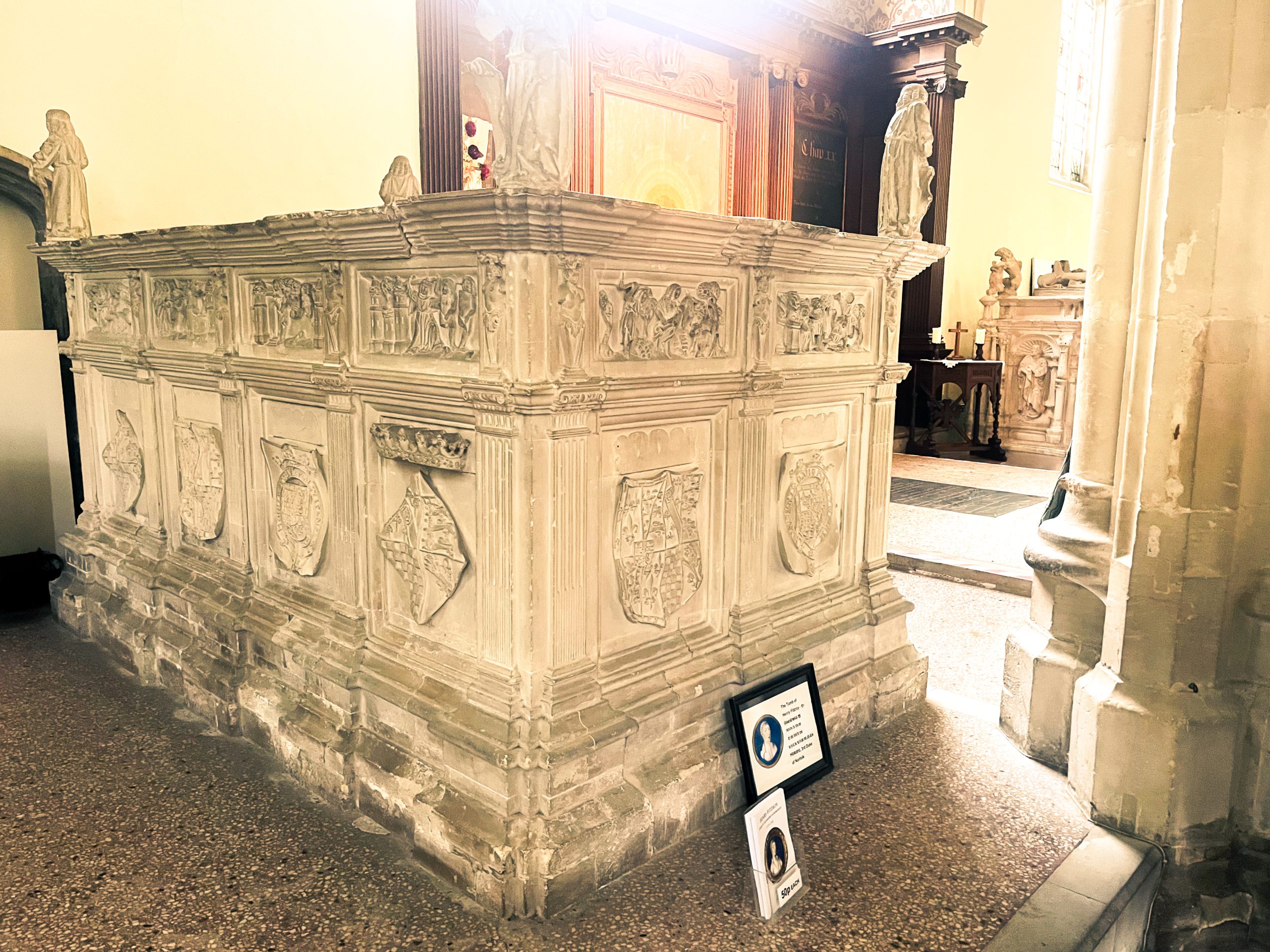
Henry Fitzroy’s tomb at St Michael’s Church, Framlingham, Suffolk

Henry Fitzroy’s coat of arms
(Courtesy of Wikimedia Commons: RS-nourse, licence CC BY-SA 3.0)
King Henry VIII & Bessie Blount
A video message from King Henry VIII and Bessie Blount will be coming soon!